Showing posts with label Leaving the Hall Light On. Show all posts

Friday, October 4, 2013

Wonderful book club experiences

In the last week I’ve had two opportunities to discuss my memoir, Leaving the HallLight On, and most specifically bipolar disorder and surviving suicide at two book club meetings.

One was in the San Diego area, about an hour and a half from my home; the other in Palos Verdes Estates about ten miles south of where I live. Both of the invites came from long-time friends. Even so, I felt very honored to be asked.

And since I feel the intimacy and the openness of a book club discussion is a wonderful way to promote a book and a cause, I don’t mind traveling long distances to attend.

On Friday night I met with ten women. Yesterday eighteen women huddled around me firing questions left and right.

That’s how I like it. Though I might say a few introductory words, I like the discussion to be in the form of questions and answers. That way I can discuss what my audience wants to hear.

And both groups wanted to discuss the subject matter of my book – bipolar disorder and suicide, and how I survived my son’s suicide. They also wanted to tell their stories. No matter how many groups I’ve interacted with, it always turns out that most people in attendance know someone – a relative or a friend – who has been through a similar experience as mine. I always hear a story or two that breaks my heart.

Of the many people I talked to this week, only one was interested in how I put my book together and how long it took to get my book published. I found that interesting. These are groups of readers, not writers. They generally don’t want to hear about how a book is made, they want to know more about the story in the book.


For me that’s a good thing. I want my story to get out. I hope these women will join me in my mission to erase the stigma of mental illness and help prevent suicide. And from what I heard I’m confident they will.


  Left or Right?  

Wednesday, October 2, 2013

Does changing a book cover grow sales?

About a week or so ago, my publisher, Mike O’Mary of Dream of Things, suggested we change the cover of the ebook edition of my memoir, Leaving the Hall Light On. I suspect the main reason was that sales were falling off, and the book needed a little boost. However, in his explanation to me he said:

“I decided to recommend a cover using a photo of Paul. I picked the photo of him as a college freshman. It's a great photo of Paul, and I think a lot of potential readers will be hooked by the image of a handsome young man who looks happy and healthy. He looks like someone you'd want as your own son or brother or partner. They will identify with him before they even know what the book is about. 

I think all of that will be enough to get more people to read the description of the book -- and once they read the description, I believe they will want to read the book because they will be stunned that such a thing could happen to a person who could have been their own son or brother or partner.”

At first it was hard for me to let go of the original cover – especially since I’m so connected to the young woman who took the photograph. However, I liked Mike’s argument and gave him the go-ahead to make the change. He said it’s very easy to change an ebook cover, and true to his word, he put a new cover with Paul’s photo up on Amazon for the ebook within a few days. Here it is.


 As soon as it went up I shared it around my Facebook network and got some wonderful feedback:

“I like it. I think it adds a new dimension to the book putting Paul on the cover. The book is a tribute to him and the cover reinforces that.”

“IMO, this picture of Paul as a vibrant young man brings home the depth of your loss even more. it also pays tribute to him in a more direct way.”

“I love this. It is such a poignant photo of your son and really sets a mood for the book.”

“The other cover is generic. This one is very personal. It gets my vote!”

"Additionally, the B&W image poetically states the fine line that we walk when something like your story happens."

“This is a beautiful photo of Paul. I agree that this adds to the emotional impact. Bravo!”

I like this cover. The text makes it very clear as to what the
 reader will find in content and may relate to. The beautiful photo 
touches the heart and makes this memoir very real at first glance 
at the cover. May the book continue to find its home with many.”

“I love your new cover, Madeline - love it. xoxoxo” (This says it all.)

Since it looks like book sales have climbed a bit in the few days the new cover has been out, the question now is, should we change the cover on the paperback edition as well? Please let Mike and me know what you think.


Sunday, September 15, 2013

The psychology of memoir writing - Jerry Waxler (Part 2)

I'm so pleased to have Jerry Waxler back here with us. He has so much knowledge and interesting information about memoir, I'm sure we could go on and on. However, we'll touch on just a few topics here and hopefully you'll buy and read his book Memoir Revolution to learn more.

Back to Jerry.

In Memoir Revolution you talk about the psychology of memoir writing. I’m interested in that aspect as well and would like to ask you a few questions about it.

Madeline: Please discuss Dr. Pennebaker and his contribution to memoir.
Jerry: Dr. James Pennebaker is a researcher who studies the positive influence of writing. In a landmark study he demonstrated that students who wrote in their journals about some serious emotional dilemma ended up visiting the infirmary fewer times than students who merely wrote unemotional events, like what movie they saw. The results show in a controlled scientific way that writing heals not only the mind but also the body.

Such research helps academic and scientific institutions justify investing money in research. Also, if you’ve never done much writing about yourself, Pennebaker’s research can motivate you to get started. If you already love to write, and have been doing it for a while, you can decide for yourself how it makes you feel.

Madeline: In your experience, how does memoir writing aid healing? This is a subject very near and dear to my heart.
Jerry: For many years, journal writing has been used by individuals to help them improve self-understanding and weather emotional storms. When I was in my twenties, I went through a period of deep confusion. To survive, I wrote an hour a day in my journal. Those writing sessions were like a lifeline that kept me sane. I’ve heard of many other stories from people who journal or who otherwise turn to writing as a form of healing.

However, journaling is hardly ever intended for any other eyes than our own. As a result, even though we’ve reduced our confusion, we still might feel very much alone. When I realized I could develop a story that would allow me to share my life experience, I discovered a fascinating new healing dimension to writing.

Instead of just writing about myself for myself, I would write a story that would inform others, help me tie together the parts of myself, and help me delve deeper into the meaning and purpose of my life. I saw memoir writing as a perfect confluence of these three lifelong pursuits: appreciation of the Story as a method for understanding life, search for inner peace, and improving my understanding of my role in society.

I’m not the only one who has experienced this confluence. In the memoir blogging world, the “virtual community” where we are now having this discussion, many of us have enjoyed and want to share these benefits. You are an excellent example.

In your memoir Leaving the Hall Light On, when you were attempting to recover from the enormous personal shock of losing your son, the memoir itself is an expression of your need for a coherent understanding. I believe it is natural that you turned to the art of Story to express these life events.

I could go on and on about this subject, which is exactly why I wrote Memoir Revolution.

Madeline: And I highly recommend that all interested in memoir read Memoir Revolution. Here's another subject that comes up among memoirists all the time. Do you advocate telling our deepest darkest secrets in our memoirs?
Jerry: When people first think about writing a memoir, they often rush to their stash of embarrassing memories to make sure they are securely locked away. This impulse makes perfect sense. As social beings, we need approval and fear that revealing ourselves could make people think less of us. We might “lose face.”

However, these fears lead us too far in the opposite direction. We become so overprotective of our embarrassments that we tend to hide all kinds of things. We hide sexuality, failures, indiscretions, compulsions. We even hide faith and religion from each other. With so much hiding, we think we’re going to be more lovable because no one will be able to find any fault. But we end up making ourselves look bland and indistinguishable from everyone else. With all our unique characteristics tucked away in the vault, we feel invisible and alone. In a sense, by avoiding humiliation, we have created a sort of isolation chamber where we are the only ones who know the interesting stuff.

So when I think of “telling secrets” in memoirs, to me that means revealing our unique lives as we actually lived them. I think it is liberating to stop pretending we are exactly like each other, and to fully admit that we are unique.

It’s true that the things that make us unique are not always the thing we would share when we want to impress someone. However, after you’ve been writing your memoir for a while, you learn how to contain these parts of yourself in the universal structure of Story. When you learn to organize yourself into stories, the good and bad blend together into an authentic real-life journey. As a memoir writer, you become far more interesting than when you spend all your time hiding in order to pretend to be flawless like everyone else.

Madeline: Thanks for that clarification. Please tell us about your current writing projects. What are the challenges and what are the fun parts?
Jerry: I’ve been working on my own memoir since 2004. I have found it to be one of the most creatively stimulating periods of my life. I never wrote stories, so I am learning to construct a story. This is a fascinating learning process! I like the way you phrase the question, “challenges and fun.” In fact, the challenges ARE the fun, because I learn so much from striving towards excellence. In addition to organizing the material, I have been motivated to learn many microskills such as dialog, story structure, description, scene building. I’m still learning!

Because I am still learning to polish my story, I don’t feel it’s quite ready to be “released.” And like many other writers, I have some privacy issues I am still working on. However, during the years of writing the story, I have experienced huge benefits. I gain pleasure and satisfaction from sharing it in my critique groups, and getting feedback from beta readers. Over the years of writing, I have grown increasingly comfortable with my own past. This ability to know myself in stories was one of my main goals and I have achieved this already even as I continue to polish, revise, and improve my story-writing skills.


My real mission, the thing that gets me springing out of bed in the morning and racing to my writing desk, is joining together with everyone in the world who wants to write their stories. I’ve written a couple of books about this, including a unique one called Four Elements for Writers, a self-help book for aspiring writers who want to overcome the psychological obstacles such as self-doubt, finding the time, and embracing their audience. Based on workshops I offer to help overcome internal obstacles, I published the first version in 2005 and made it available from my website. I am rewriting that in an updated format, and will release it on Amazon in paper and eBook sometime later this year under the new title, “Writers: Train Your Brain!”

Memoir Revolution Synopsis
In Memoir Revolution, Jerry Waxler shows how memoirs link us to the ancient, pervasive system of thought called The Story. By translating our lives into memoirs, we discover the meaning and purpose that eludes us when we view ourselves only through the lens of memory. When we share these stories, we create deep connection and mutual understanding.

The author traces the emergence of the Memoir Revolution through his own journey from rebellion and chaos in the 60s; from mysticism to computers in the 70s; and from receiving talk therapy to providing it in the 80s and 90s. Through extensive commentary on over 100 memoirs, self-help and fictional works, Waxler draws you into the power of this literary movement, where you can find a voice for your own life experience.


Jerry's bio
Jerry Waxler shares his passion for life story writing on the blog Memory Writers Network which contains 100s of essays, interviews and book reviews. His two books, Learn to Write a Memoir and Four Elements for Writers are available from jerrywaxler.com. He teaches nonfiction writing at Northampton Community College in Bethlehem, Pennsylvania, is on the board of directors of the Philadelphia Writers Conference, and is an advisor to the National Association of Memoir writers. He has a B.A. in Physics and M.S. in Counseling Psychology.

Links
Buy Four Elements for Writers
http://www.jerrywaxler.com/four_elements.html

Buy Memoir Revolution
http://amzn.to/10W8kkb


Thursday, August 15, 2013

Kindle Nation newsletter applauds my publisher, Dream of Things

Kindle Nation Bargain Book Alert: Four Best-Selling Memoirs for 99 Cents Each – Plus Three Bonus Books!


Mike OMary 0912 low res - cropped
Publisher Mike O’Mary
Dream of Things is an indie publisher with a reputation for finding and publishing high-quality memoirs. Each of the memoirs offered today for 99 cents has 50+ reader reviews and ratings of 4+ stars.
“We focus on memoirs and creative nonfiction,” says publisher Mike O’Mary. “Our goal is to provide readers with distinctive voices, meaningful books.” So far, it looks like Dream of Things is succeeding. Check out this great line-up of memoirs – all at ONLY 99 CENTS August 15-17.

*  *  *

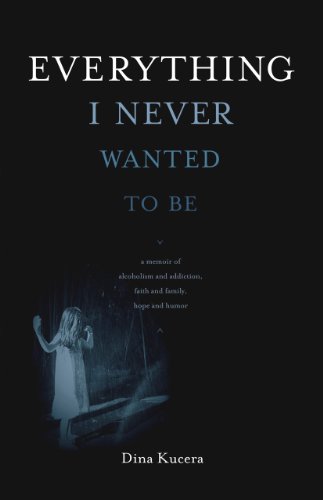
Everything I Never Wanted to Be by Dina Kucera (159 Reviews, 4.6 Stars): “How come people who have experienced such trauma write so well? So raw and funny that it almost makes me want to have horrible things happen to me so my writing will improve.” Joel Stein, Time Magazine columnist

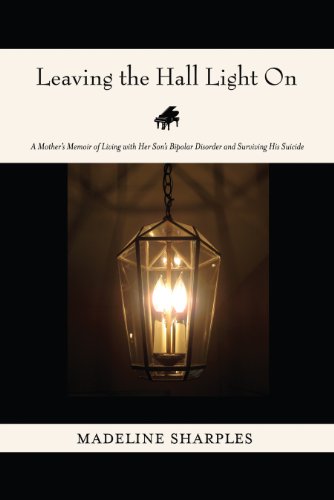
Leaving the Hall Light On by Madeline Sharples (149 Reviews, 4.4 Stars): A mother’s story of living with her son’s bipolar disorder and surviving his suicide. “A moving read of tragedy, trying to prevent it, and coping with life after.” Midwest Book Review

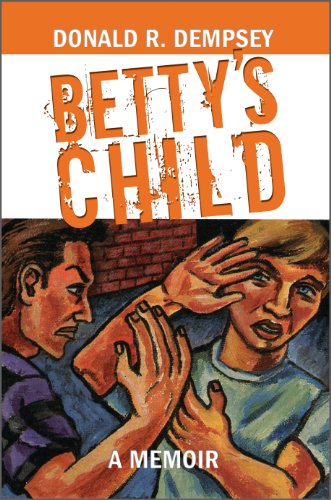
Betty’s Child by Don Dempsey (115 Reviews, 4.7 Stars): In the tradition of Frank McCourt and Angela’s Ashes, the true story of one boy’s ordeals with poverty, violence, religion, and physical and mental abuse as he attempts to come of age with only his street smarts and sense of humor to guide him. “Heartrending and humorous.” Kirkus Reviews

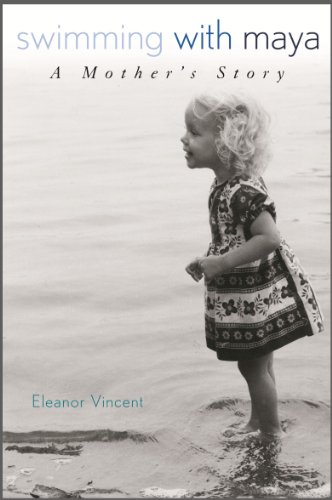
Swimming with Maya by Eleanor Vincent (49 Reviews, 4.4 Stars): Demonstrates the remarkable process of healing after the traumatic death of a loved one. “Vincent’s poignant decision to donate Maya’s organs will resonate with even hard-boiled readers.” Booklist

Bonus books: Dream of Things also publishes anthologies of creative nonfiction – collections of essays that are “short and deep” says O’Mary, with more depth than the typical Chicken Soup story, but shorter and more digestible than Best American Essays. Download these thoughtful and thought-provoking collections for only 99 cents!
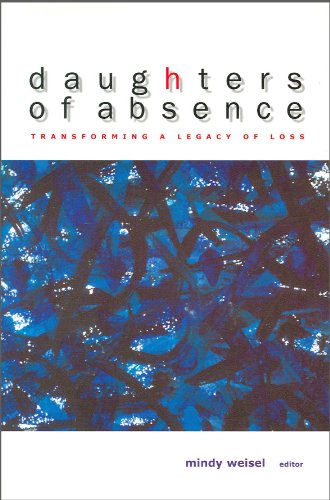
Daughters of Absence  (25 Reviews, 4.4 Stars): A collection of twelve essays written by daughters of Holocaust survivors. “A powerful, life-affirming read and a strongly recommended addition to Holocaust studies reading lists and reference collections.” Midwest Book Review

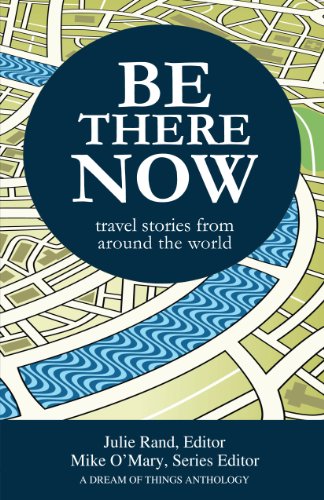
Be There Now  (24 Reviews, 4.8 Stars): Travel stories from around the world. “More of an experience than reportage; I was truly THERE instead of HERE.” Marginalia

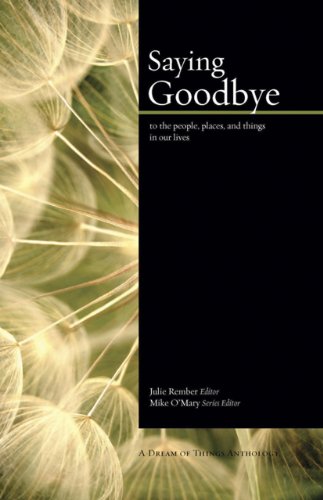
Saying Goodbye (29 Reviews, 4.7 Stars): True stories about saying goodbye to the people, places and things in our lives. “Tender perspectives helping readers with their own goodbyes.” Midwest Book Review

Want More? Free and Bargain Quality eBooks delivered straight to your email everyday – Subscribe now http://www.bookgorilla.com/kcc

Wednesday, July 3, 2013

Live radio and a rave review

I was thrilled to be interviewed by Cyrus Webb yesterday on his live blog talk show, Conversations LIVE! Radio. We discussed mental illness, suicide, and finding meaning in life after unthinkable tragedy. What I took away from that conversation is the importance of having these conversations – openly and truthfully – without pretense. That these are hard subjects is a given. But we must bring them into the light so that others will benefit. If we say the mental illness and suicide words often enough we will have a chance of erasing stigma. Only then will people begin to acknowledge their illnesses and seek help. Only in that way can we save lives.


I was also most impressed that Cyrus acknowledged his failed suicide attempt almost at the start of our interview. This shows the extent of the honesty in our discussion.

Here’s the interview. Please listen. As my publisher at Dream of Things, Mike O’Mary said: “Could be the most important 20 minutes you spend today.”

And I’m very thankful that Cyrus not only took the time to read my book, Leaving the Hall Light On, he generously posted a five-star review this morning. Here’s the review in its entirety. 

Madeline Sharples' LEAVING THE HALL LIGHT ON Shines A Light on What It Means to Live When Life Isn't EasyJuly 3, 2013


Throughout the challenges that we all face in life are the decisions we sometimes make that can literally change the course of the world for us forever. Sometimes we don't understand or even appreciate how one act can set off a chain reaction that affects everyone around us. In LEAVING THE HALL LIGHT ON Madeline Sharples allows us into her world, how she faced challenges and learned how to press on in spite of it all.

The book was born out of the death of her son Paul, but is a perfect letter of love for the world to see how not only to live in spite of challenges but how not to be defined by them. We are able to see how her son's diagnosis with bipolar disorder affected his attitude about what he could contribute to the world and even gave the illusion that maybe the world was better off without him. What we see through the book is proof of the exact opposite. Madeline shows that by losing her son it was almost as if her own life had no meaning or purpose. Ironically, though, she found where her true calling and purpose would lie: being a source of hope for others. Through this new role she could not only go on in her own life, but show others how they could do the same.

No one wants to go through challenges or difficulties. We don't welcome them, but I was able to see through this book how they help us sometimes become the person we were meant to be---if only we allow them to be true teachable moments. We can grieve, we can hurt, but we have to push forward towards the healing. If we can do that then we can become a source of strength and inspiration for others.

Delivered with passion and fueled by love LEAVING THE HALL LIGHT ON speaks to what it means to live when living isn't always easy.